Racism and Civil Rights
The National Geographic
“Jimmy was always in trouble for the right reasons!”
“Jimmy was always in trouble for the right reasons!”

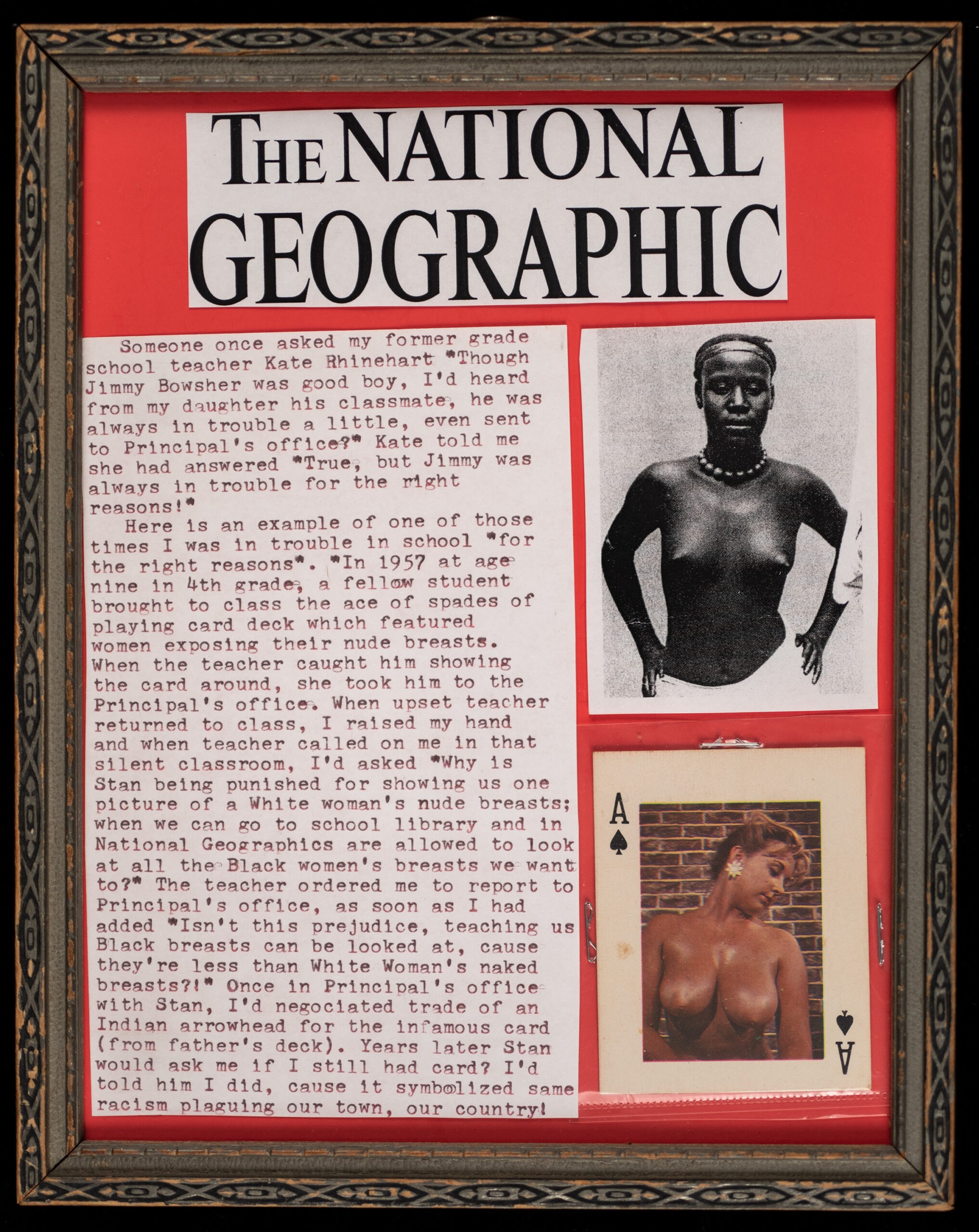
Someone once asked my former grade school teacher Kate Rhinehart, “Though Jimmy Bowsher was good boy, I’d heard from my daughter his classmate, he was always in trouble a little, even sent to Principal’s office?” Kate told me she had answered “True, but Jimmy was always in trouble for the right reasons!”
Here is an example of one of those times I was in trouble in school “for the right reasons.” In 1957 at age nine in 4th grade, a fellow student brought to class the ace of spades of playing card deck which featured women exposing their nude breasts. When the teacher caught him showing the card around, she took him to the Principal’s office. When upset teacher returned to class, I raised my hand and when teacher called on me in that silent classroom, I’d asked, “Why is Stan being punished for showing us one picture of a white woman’s nude breasts, when we can go to school library and in National Geographic are allowed to look at all the black women’s breasts we want to?” The teacher ordered me to report to Principal’s office, as soon as I had added “Isn’t this prejudice, teaching us black breasts can be looked at, cause they’re less than white woman’s naked breasts?!”
Once in Principal’s office with Stan, I’d negotiated trade of an Indian arrowhead for the infamous card (from father’s deck). Years later Stan would ask me if I still had card? I’d told him I did, cause it symbolized same racism plaguing our town, our country!
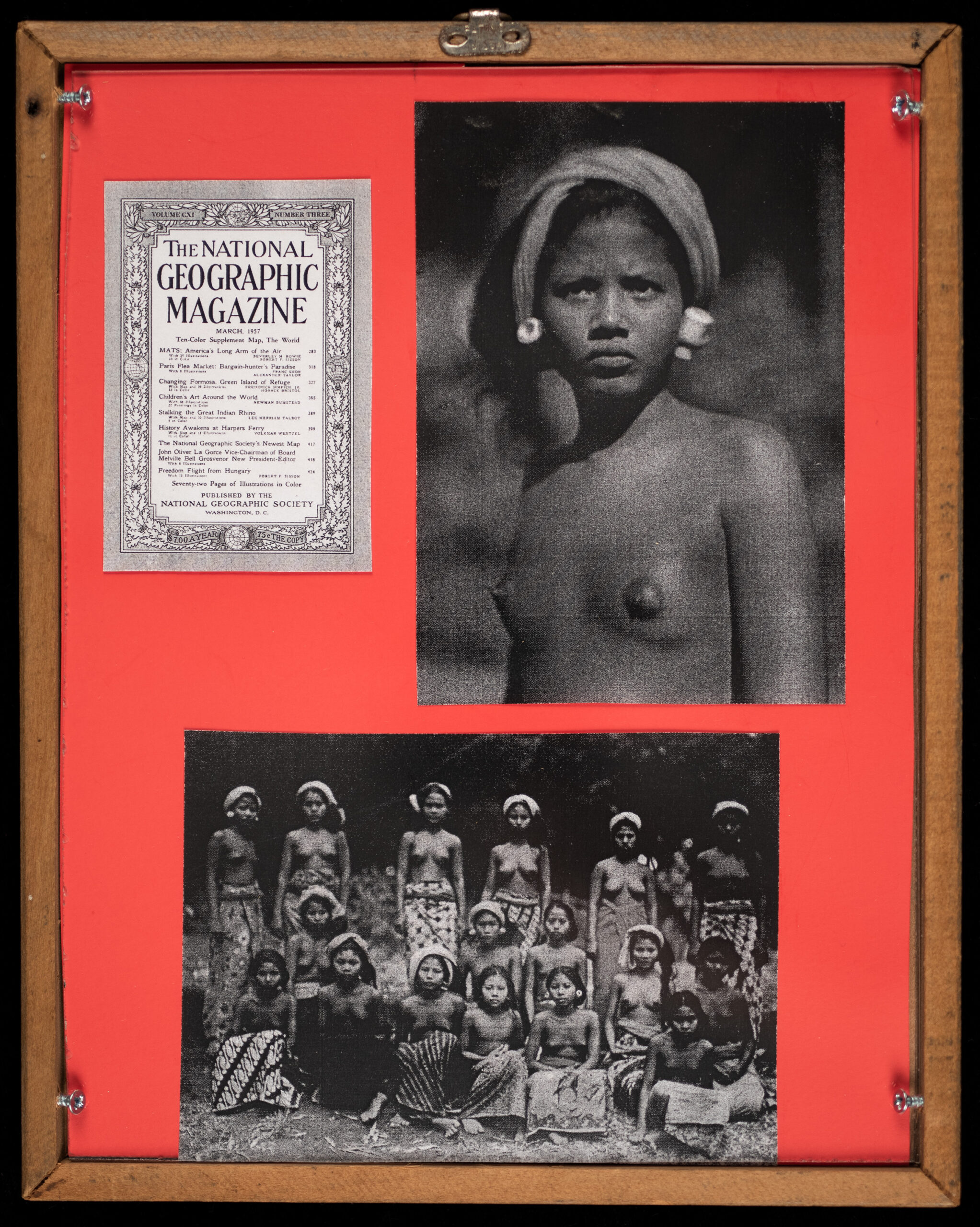

In these framed pieces, Jim tells the story of each object and, importantly, preserves his original research and documentation. In many instances, the story concludes on the back of the frame. In cases where the similarity of content may cause confusion for viewers, the beginning of the story is highlighted.