Racism and Civil Rights
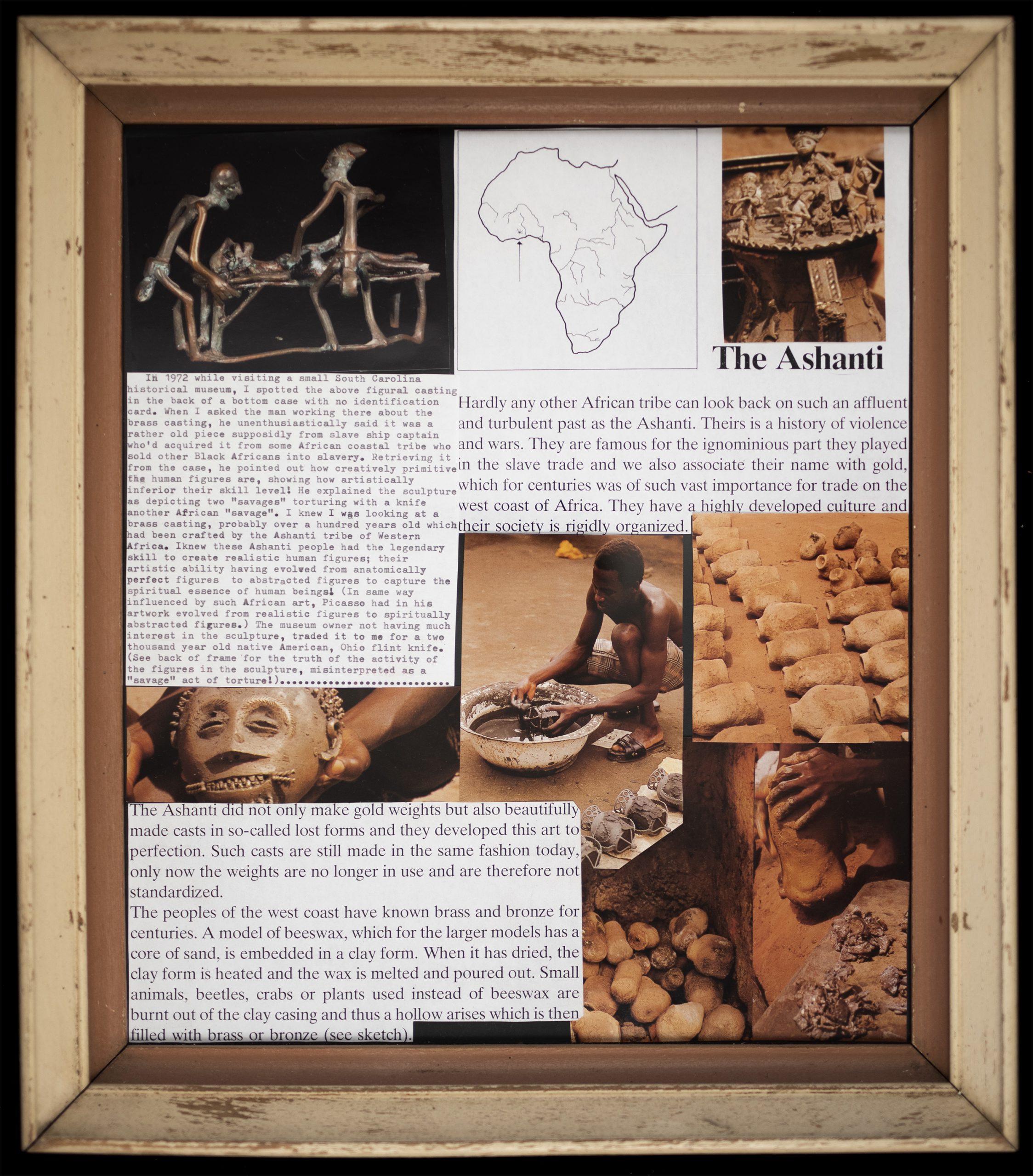
The Ashanti
A small sculpture reveals the truth about an African tribe.
A small sculpture reveals the truth about an African tribe.

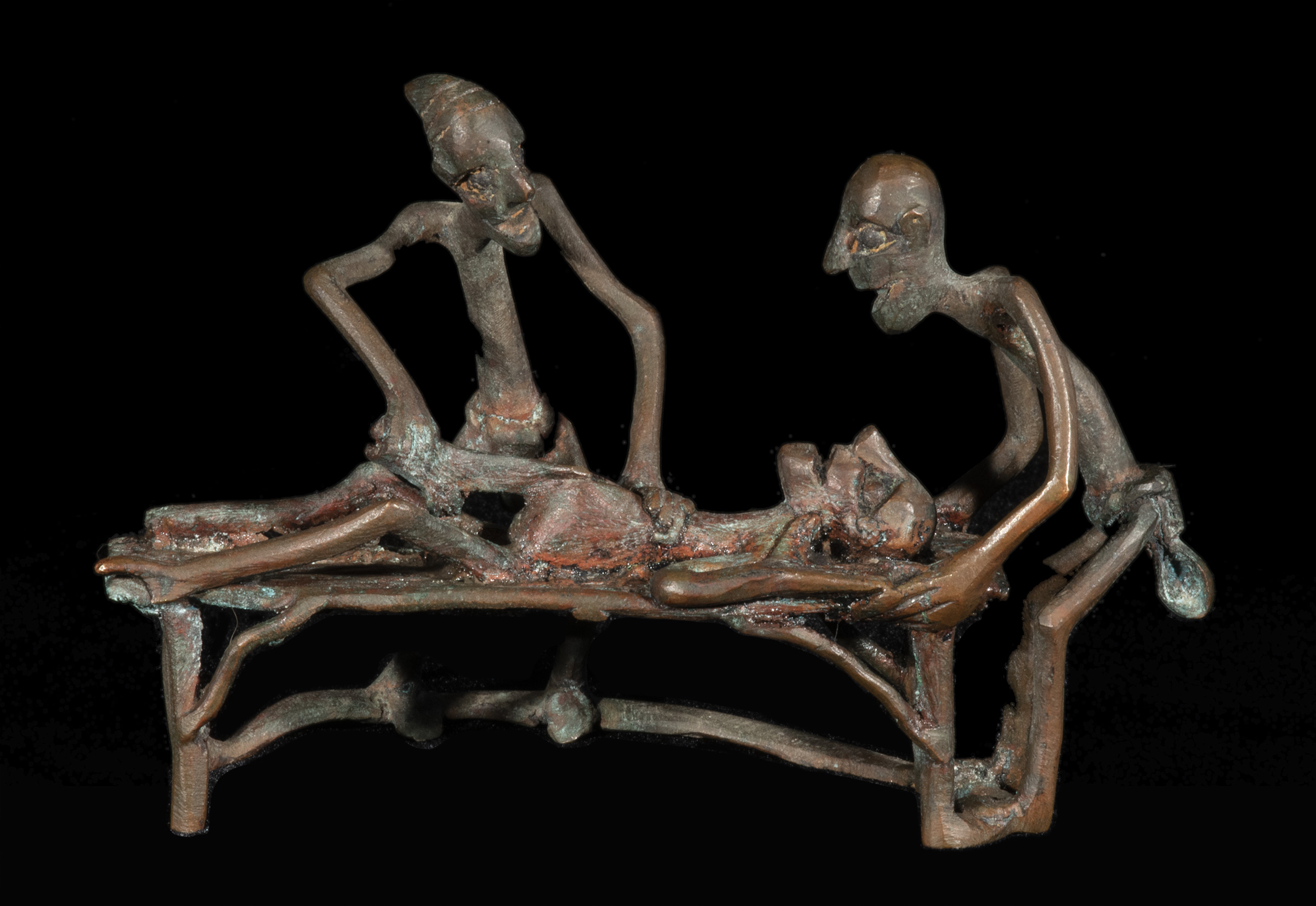
In 1972 while visiting a small South Carolina historical museum, I spotted a figural casting in the back of a bottom case with no identification card. When I asked the man working there about the brass casting, he unenthusiastically said it was a rather old piece supposedly from slave ship captain who’d acquired it from some African coastal tribe who sold other Black Africans into slavery. Retrieving it from the case, he pointed out how creatively primitive the human figures are, showing how artistically inferior their skill level! He explained the sculpture as depicting two “savages” torturing with a knife another African “savage.”
I knew I was looking at a brass casting, probably over a hundred years old which had been crafted by the Ashanti tribe of Western Africa. I knew these Ashanti people had the legendary skill to create realistic human figures; their artistic ability having evolved from anatomically perfect figures to abstracted figures to capture the spiritual essence of human beings! (In same way influenced by such African art, Picasso had in his artwork evolved from realistic figures to spiritually abstracted figures.) The museum owner not having much interest in the sculpture, traded it to me for a two-thousand year-old native American, Ohio flint knife.
As the photo taken from the other side of the figural casting shows, it’s not the depiction of two Ashanti “savages” in the act of torturing another African tribal member with a knife; but skilled Ashanti Holy Men performing on a pregnant Ashanti woman a cesarean section, assisting her to give safe birth to a child! (My research of the birthing ritual of the Ashanti tribe, revealed that the figural casting is not an artwork, but a highly spiritual object which is at present at such births to conjure the spirits of past masters of the birthing rite for magical assistance!) This piece to me reveals how prejudice is a form of distortion from psychological to the physiological visual ability to see what is clearly there; but supports one’s prejudiced view. The “savages” must be doing a “savage” thing! Many anthropologists not only believe the Ashanti invented, but perfected the casting of metal, especially gold When the “progressive” White man made contact with the Ashanti, they viewed them as “primitive, superstitious” people who wasted all that gold on mere ceremonial objects and ritualistic artwork and ornament; when they could be melting it down into truely valuble things like coinage and uniform solid gold bars to be stacked, stored away in a vault!
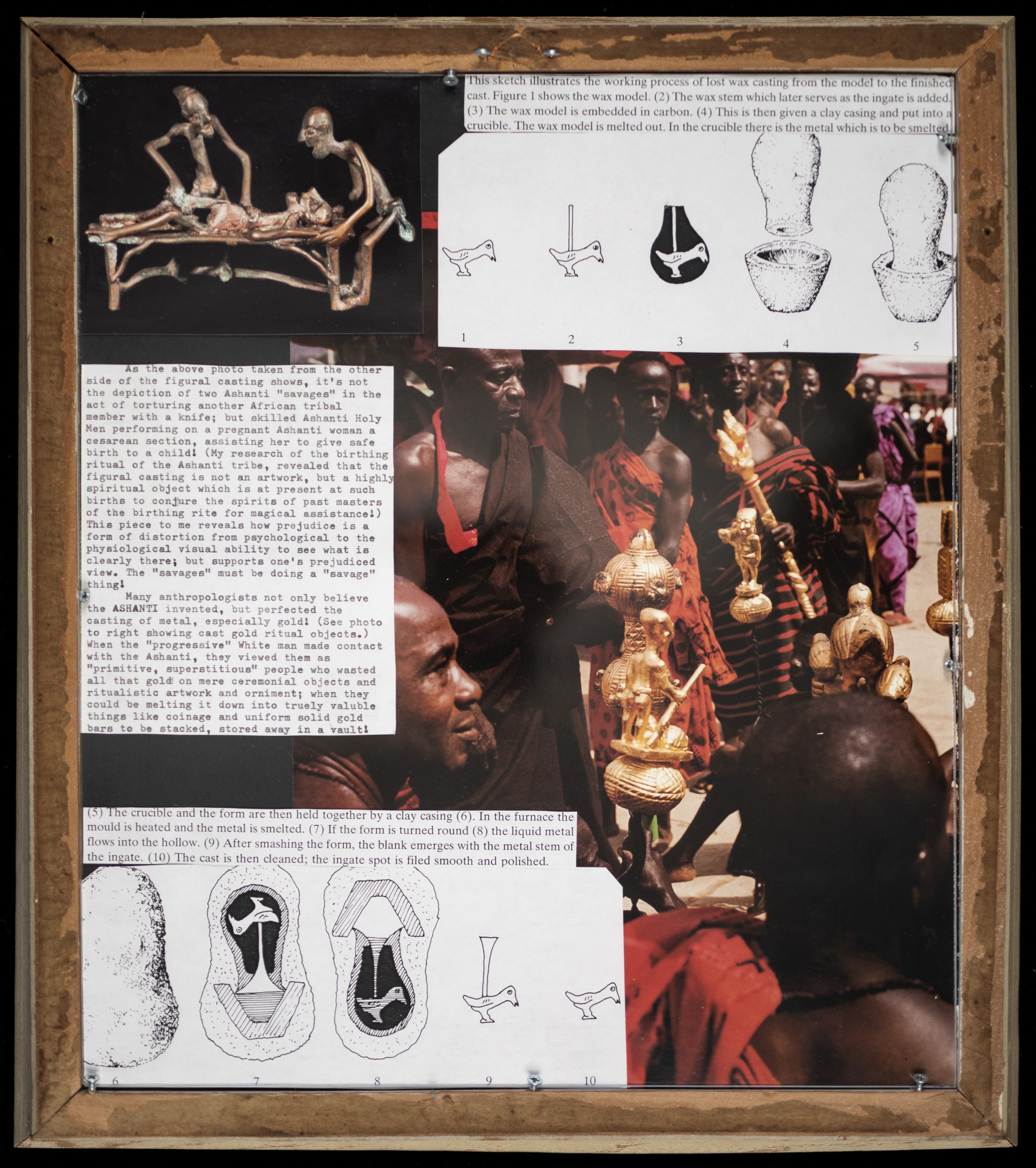

In these framed pieces, Jim tells the story of each object and, importantly, preserves his original research and documentation. In many instances, the story concludes on the back of the frame. In cases where the similarity of content may cause confusion for viewers, the beginning of the story is highlighted.