20th Century Wars
The Destroyer of Worlds
Among many items relating to the bombing of Hiroshima, a soda bottle is particularly significant.
Among many items relating to the bombing of Hiroshima, a soda bottle is particularly significant.

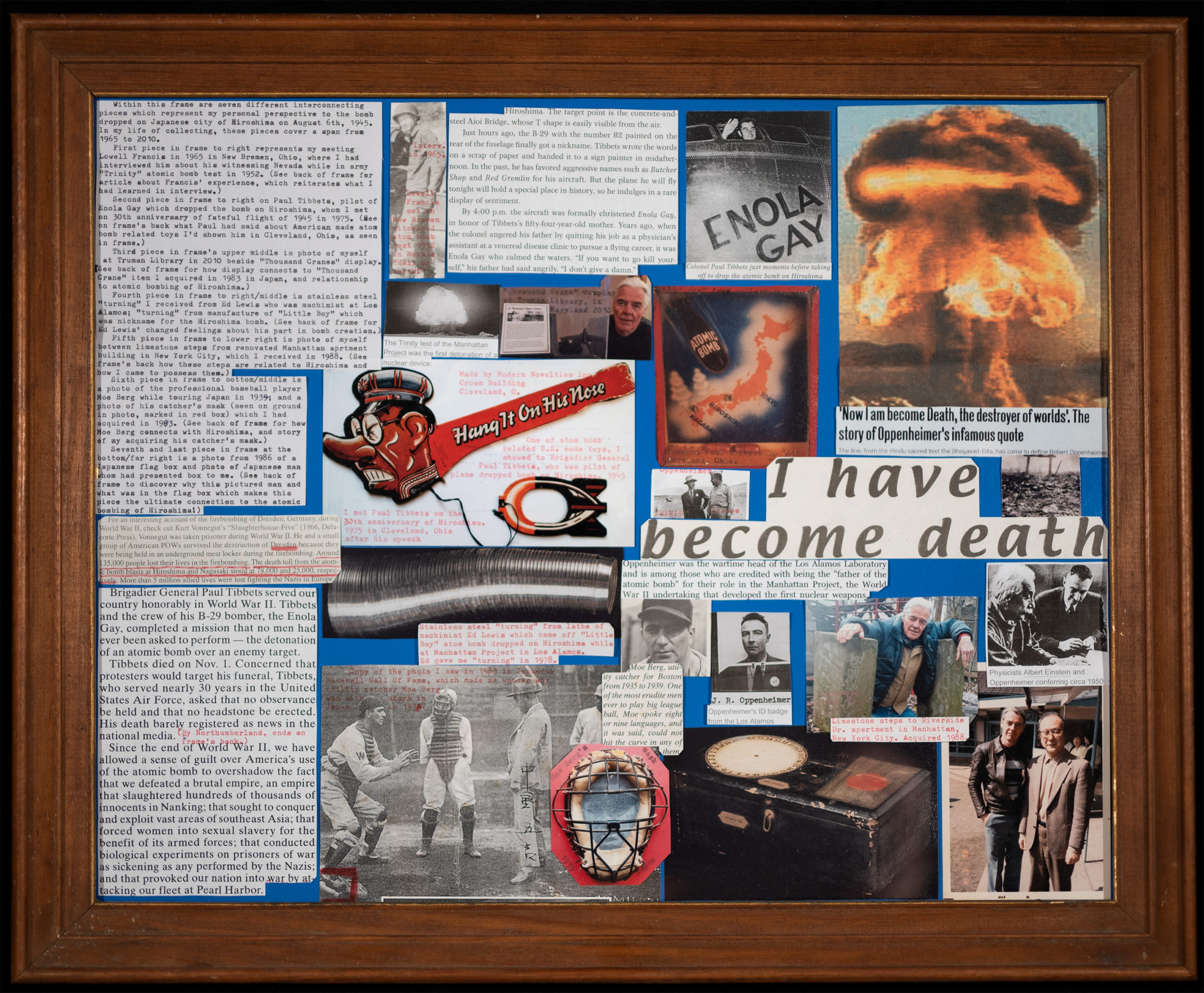
Within this frame are seven different interconnecting pieces which represent my personal perspective to the bomb dropped on Japanese city of Hiroshima on August 6th, 1945. In my life of collecting, these pieces cover a span from 1965 to 2010.
First piece represents my meeting Lowell Francis in 1965 in New Bremen, Ohio, where I had interviewed him about his witnessing Nevada while in army “Trinity” atomic bomb test in 1952. (See back of frame for article about Francis’ experience, which reiterates what I had learned in interview.) Second piece in frame to right on Paul Tibbets, pilot of Enola Gay, which dropped the bomb on Hiroshima, whom I met on 30th anniversary of fateful flight of 1945 in 1975. (See on frame’s back what Paul had said about American made atom bomb related toys I’d shown him in Cleveland, Ohio, as seen in frame.) Third piece in frame’s upper middle is photo of myself at Truman Library in 2010 beside “Thousand Cranes” display. (See back of frame for how display connects to “Thousand Crane” item I acquired in 1983 in Japan, and relationship to atomic bombing of Hiroshima.) Fourth piece in frame to right/middle is stainless steel “turning” I received from Ed Lewis who was machinist at Los Alamos, “turning” from manufacture of Little Boy which was nickname for the Hiroshima bomb. (See back of frame for Ed Lewis’ changed feelings about his part in bomb creation.) Fifth piece in frame to lower right is photo of myself between limestone steps from renovated Manhattan aprtment building in New York City, which I received in 1988. (See frame’s back how these steps are related to Hiroshima and how I came to possess them.)
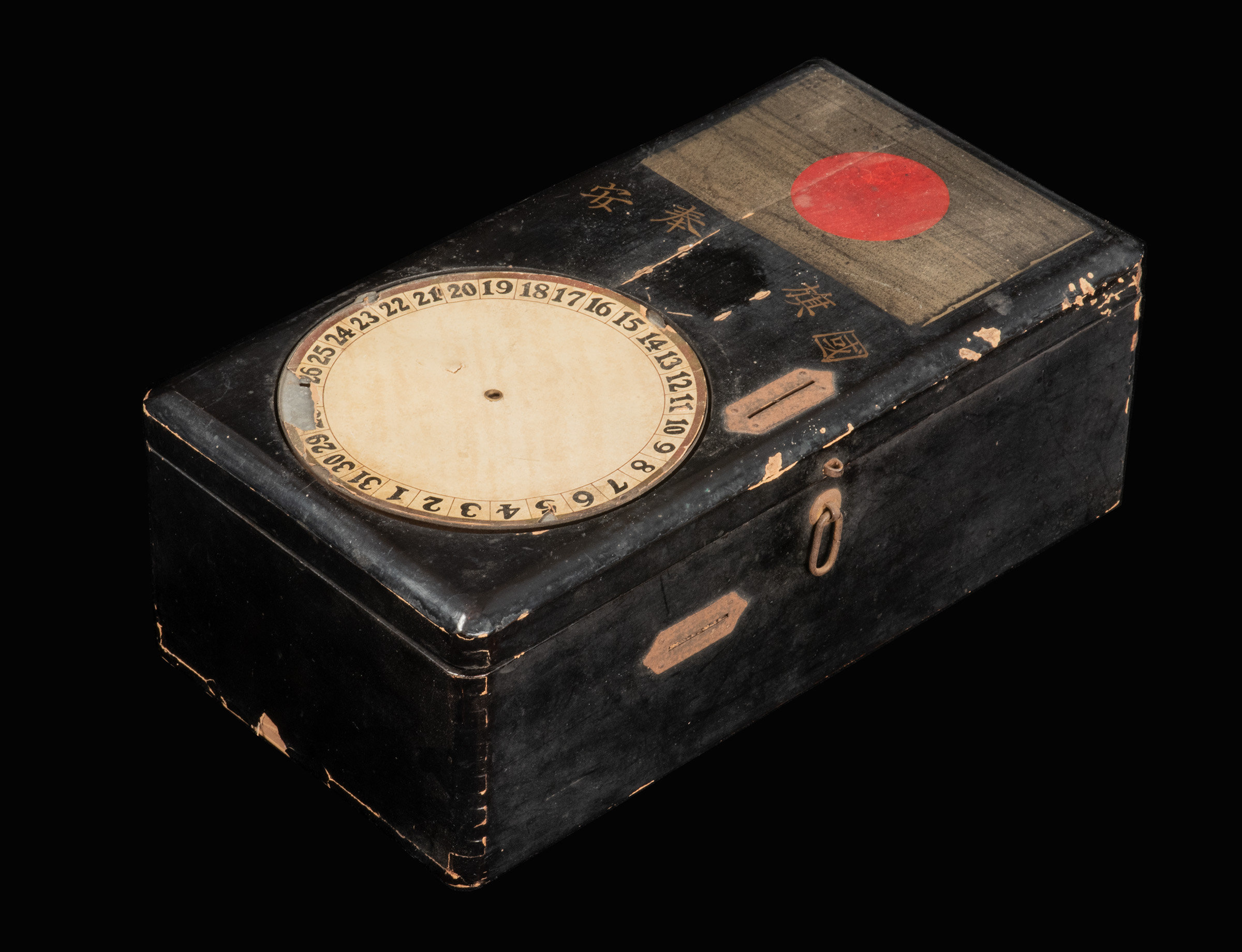
Sixth piece in frame to bottom/middle is a photo of the professional baseball player Moe Berg while touring Japan in 1939, and a photo of his catcher’s mask (seen on ground in photo, marked in red box) which I had acquired in 1983. (See back of frame for how Moe Berg connects with Hiroshima, and story of my acquiring his catcher’s mask.) Seventh and last piece in frame at the bottom/far right is a photo from 1986 of a Japanese flag box and photo of Japanese man whom had presented box to me. (See back of frame to discover why this pictured man and what was in the flag box which makes this piece the ultimate connection to the atomic bombing of Hiroshima!)
First piece concluding details concerning story of Lowell Francis whom I had interviewed about his witnessing the Trinity atomic bomb test in Nevada in 1952. In the article to upper/right is reiterated what I’d heard from Lowell in our 1965 interview. Mr. Francis had concluded our meeting with the words “That day as a young man excited about seeing the atomic blast, as the mushroom cloud rose, I heard a voice in my head gasp ‘We’ve just witnessed Hell on earth!’”
Second piece concluding details concerning story of Paul Tibbets, pilot of the Enola Gay which dropped the bomb on Hiroshima. To right is conclusion of an article on Tibbets from bottom/left on front of frame. The lasting memory from my 1975 interview with Tibbets was when I showed him the atomic bomb toys (pictured on front). His eyes had turned sad as he sighed, “This is nothing to make toys about…you know I’ve seen these toys before; they’ve been waved in my face by those blessing me for my bomb saving so many American soldiers’ lives had we had my to invade Japan. Also had them waved in my face by those cursing me as worst mass murderer in world history!”
Third piece concluding the “Thousand Crane” display at the Truman Library story is about the Japanese child Sadako Sasaki who was survivor of Hiroshima atomic bomb and had decided to create a thousand origami paper cranes as symbol of peace between America and Japan. She is pictured at right, beside Japanese article about origami peace crane project, stapled to it are two paper cranes made by Sadako Sasaki before she’d died at age twelve in 1955, which I acquired in Japan in 1983.
Fourth piece concluding details of story of Ed Lewis who had been lathe machinist on Manhattan Project at Los Alamos. I interviewed him in Nevada in 1978, at which time Ed had given me the stainless steel “turning” from his help in the manufacture of Little Boy atomic bomb dropped on Hiroshima. “Jim, as young machinist in 1945 I was honored working at Los Alamos, proud of my work; but thirty-two years later I have mixed feelings about helping to create a thing which destroyed all those lives!”
Fifth piece concluding revelation, the limestone steps I’m photographed between on frame’s front are from 155 Riverside Drive apartment building in Manhattan, New York City, where Oppenheimer family moved in 1912 and Robert had grown up. How I acquired them, after giving tour of my yard to truck driver’s kids, he’d said he’d bring back in empty truck some stone for me. One day he brought me limestone steps from New York City “from home of some bomb guy, they remodeled on Riverside…Oh yeah, the guy’s name was Robert Oppenheimer.” I use steps to inspire people, saying “If Robert Oppenheimer’s New York steps can end up in my Wapak yard, anything can be anywhere; anyone can become anyone!”
Sixth piece concluding revelation of Professional baseball player Moe Berg’s connection to Hiroshima was in 1934 when on ball player tour of Japan, he’d gone as spy who’s filmed information around the “T-Bridge” in Hiroshima was used in target briefing of Tibbets for bombing. (In Tibbett interview in 1975 he’d mentioned “spy film footage”.) I traveled to Belleville, New Jersey, in 1983 and met Moe Berg’s sister, Ethel (with whom Moe Berg had lived out last mysterious years of his life, until his death in 1972). Ethel told me what had “damaged” her “genius” brother most was their father disowning him for wasting his extreme intelligence playing pro baseball! When she told me about taking Morris’ (Moe’s) ashes to Israel, I became tearful. Ethel said “Jim, your compassion for my brother has earned you this.” She pulled from under table, handed me the 1930s catcher’s mask won by Moe Berg when in Japan as a spy!
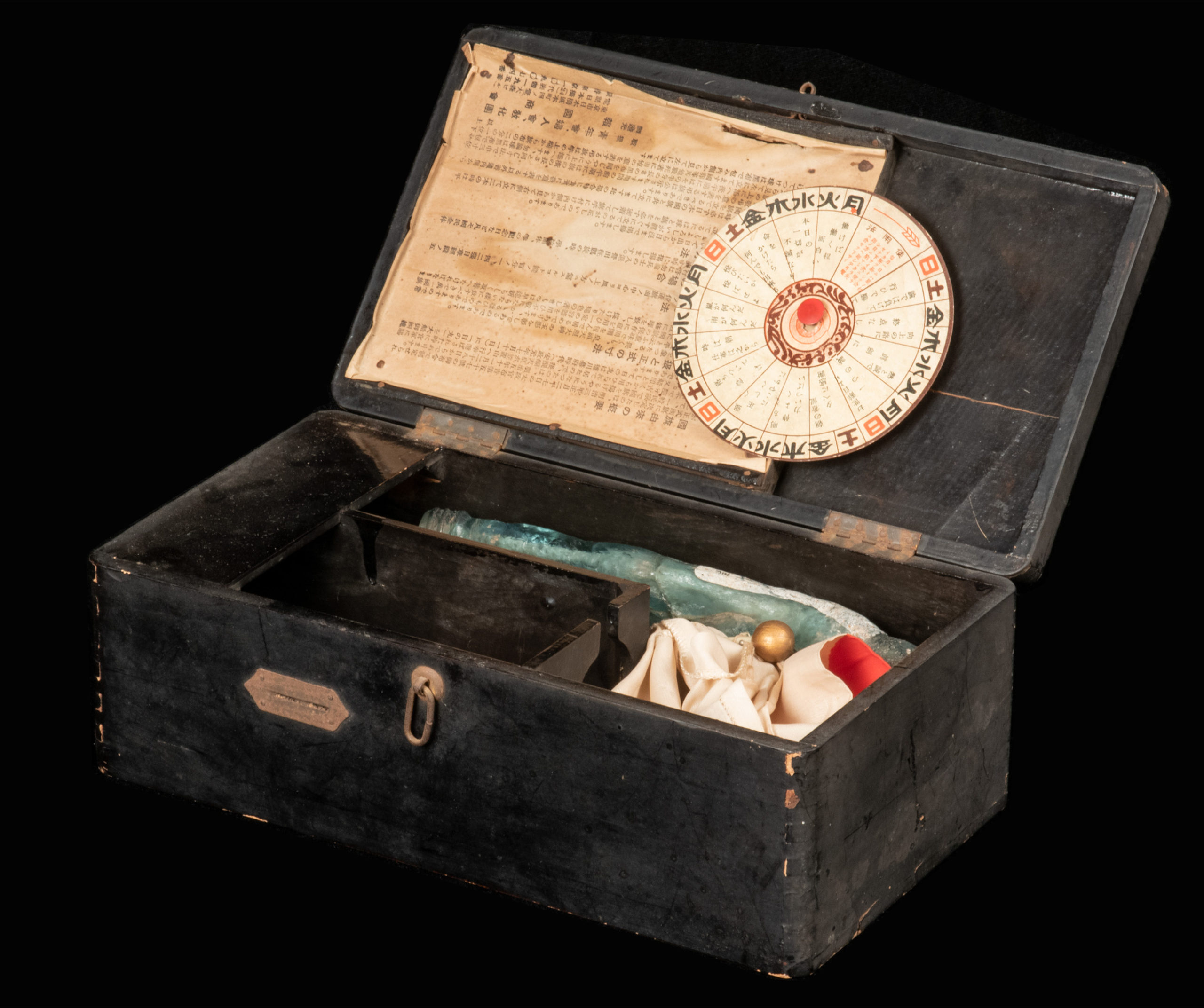
Seventh piece is the story behind the Japanese man with me in 1986 photo and Japanese flag box which he’d presented to me, containing this frame’s ultimate Hiroshima connection The Japanese man (desiring anonymity) traveled with me by train to Hiroshima, where at location in rebuilt city he had described the following story. Working in building holding city records, in thick concrete basement he felt shaking he thought familiar earthquake; but when opened doors, at top of stairs beyond rubble of building, Hiroshima was gone. He then unwrapped flag box which had survived bombing. Within wrapped in Japanese flag was, from a bottling works recently opened, a bottle melted in bomb blast!
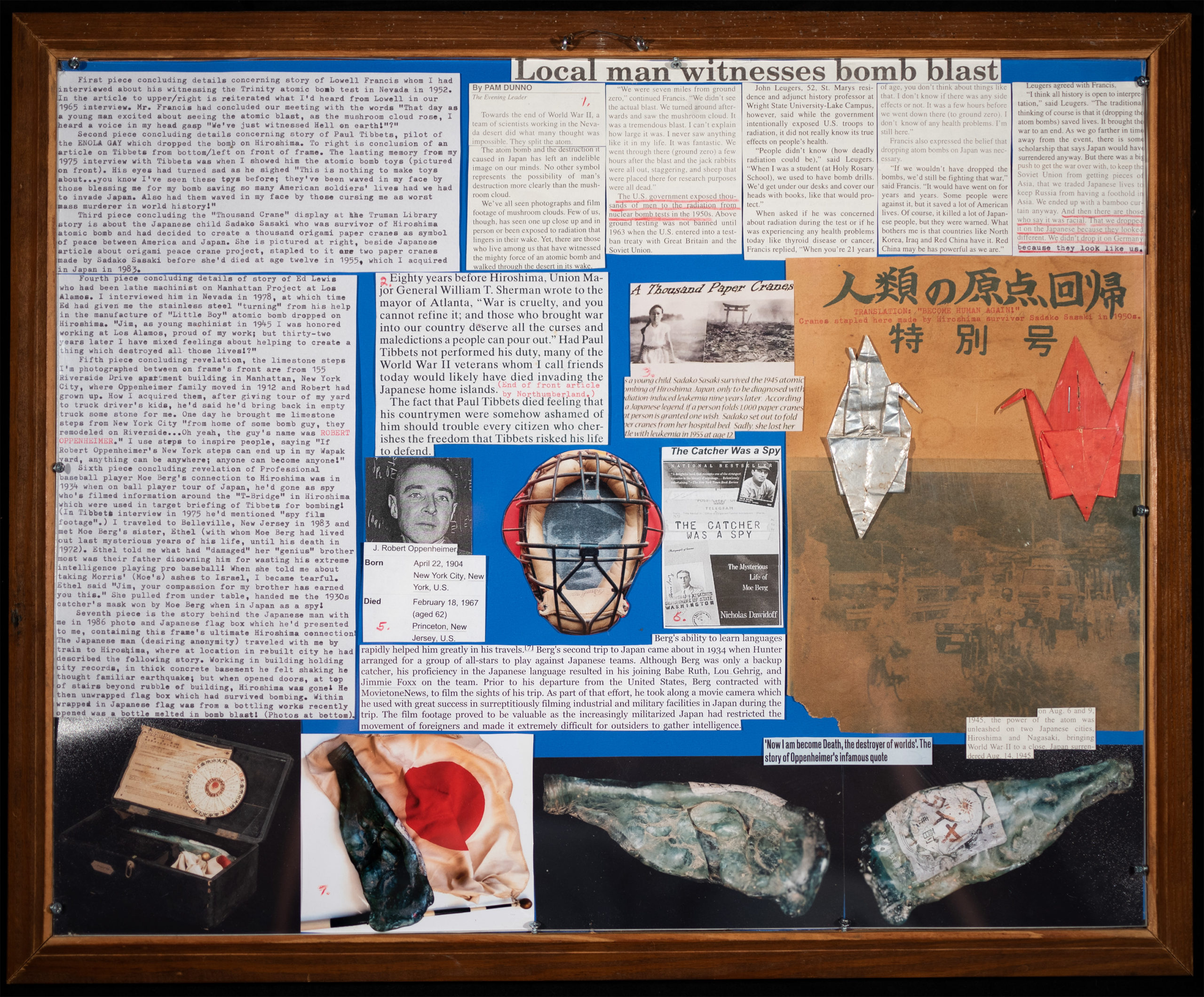
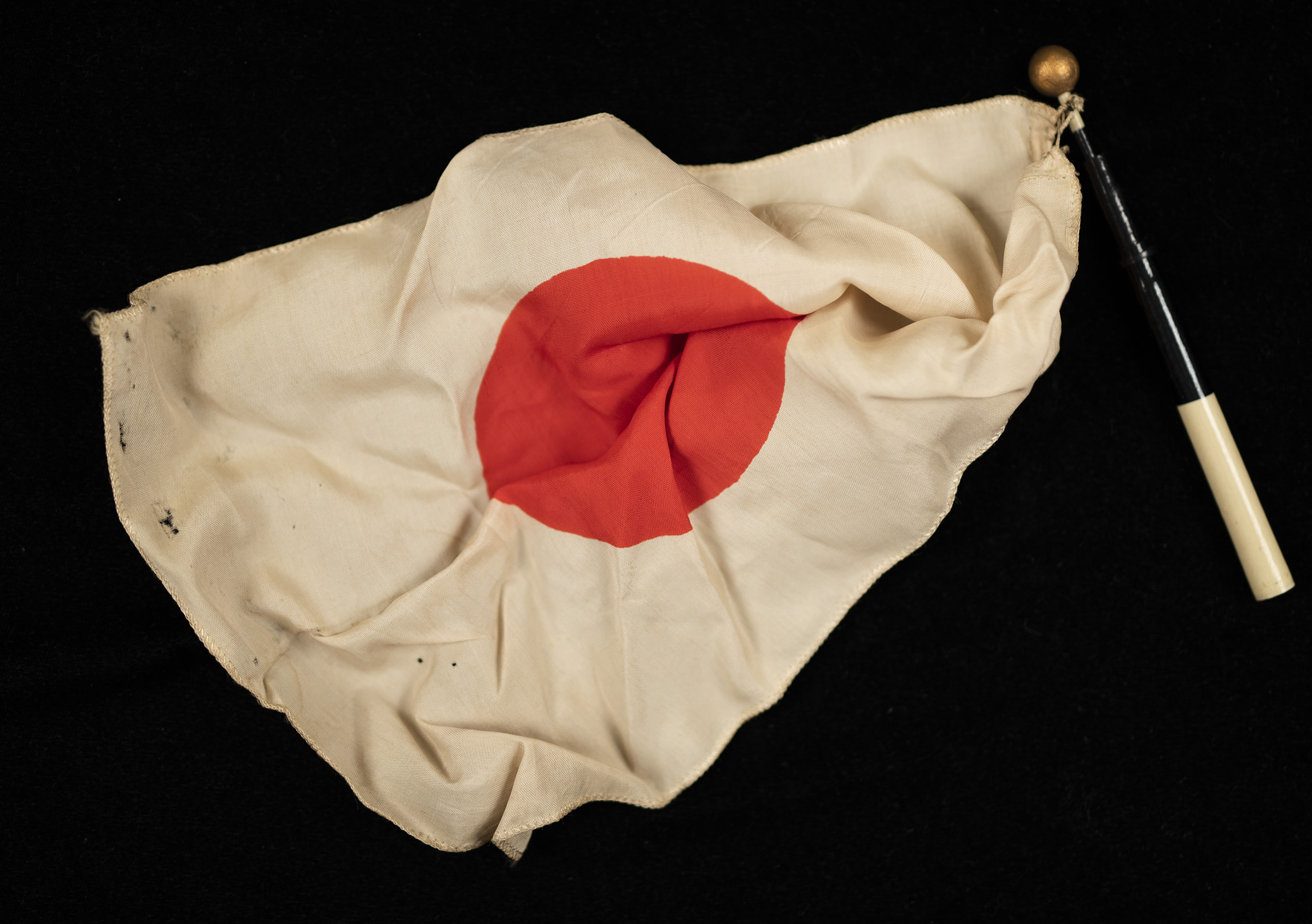
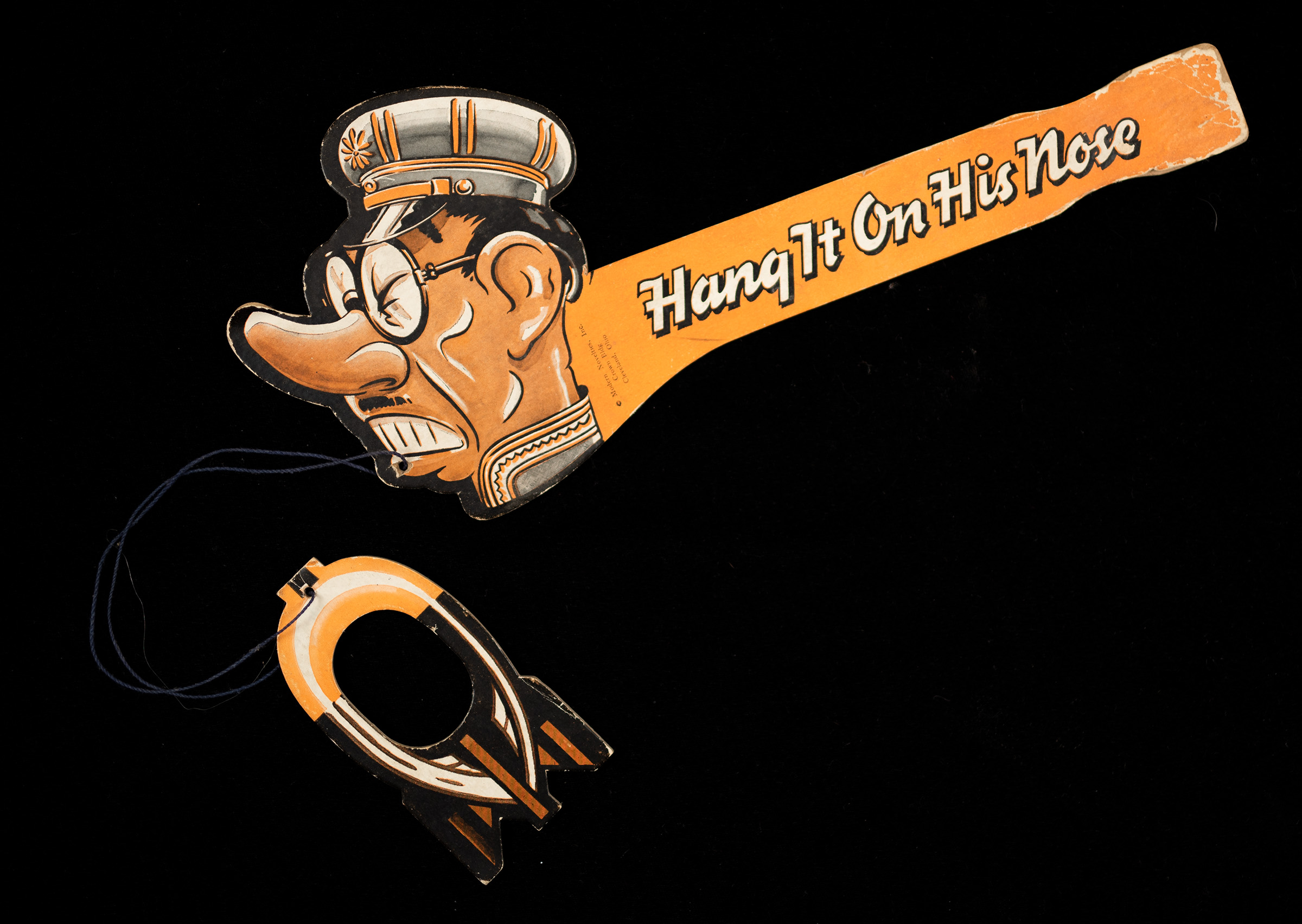
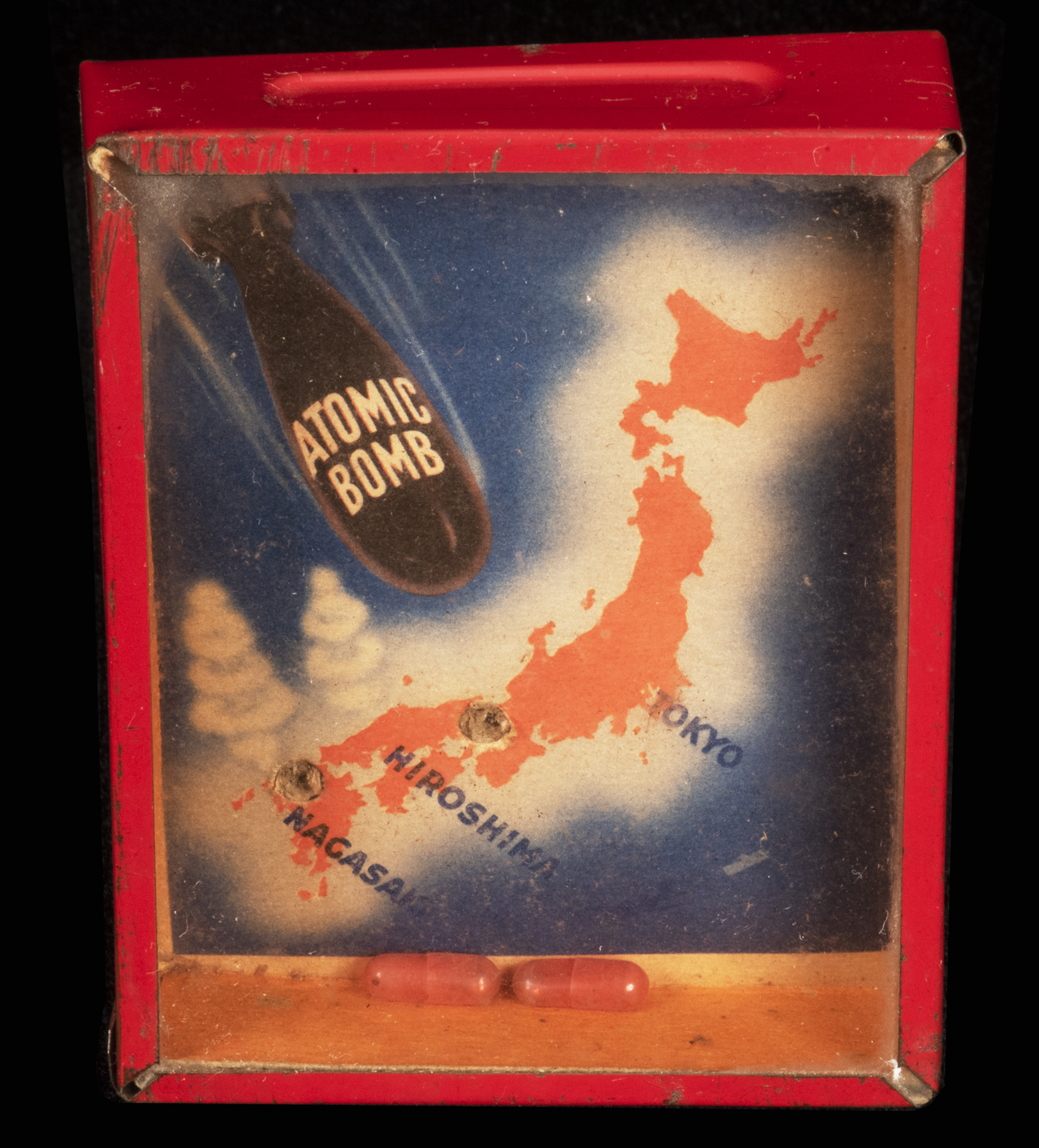

In these framed pieces, Jim tells the story of each object and, importantly, preserves his original research and documentation. In many instances, the story concludes on the back of the frame. In cases where the similarity of content may cause confusion for viewers, the beginning of the story is highlighted.